The Shareholders of Armageddon

“War is a good business — invest your sons.”

Ironic anti-war slogan, echoed in James A. Michener’s The Drifters (1971)

While the sons of ordinary people are counted among the dead, the men who funded the missiles are counting their returns. A meditation on war, profit, and a quote that is fifty years old and more relevant than ever.

There is a line so cold, so perfectly forged in irony, that it has survived half a century without aging a single day: War is a good business — invest your sons. James Michener did not coin it to celebrate war. He wielded it as a scalpel, cutting open the comfortable distance between those who declare wars and those who die in them. Today, watching the skies over the Middle East light up in real time on our phone screens, that line feels less like literature and more like a live ticker on a trading floor.

The war between Israel and Iran — proxies, missiles, and now direct confrontation — has produced two distinct classes of people: those absorbing the blast radius, and those absorbing the profits. The market does not mourn. On the morning after each escalation, defense and oil stocks rise before the smoke has cleared. It is not callousness, the analysts will tell you. It is simply how markets price in probability. But there is a word for a system in which other people’s children are a pricing mechanism. Michener knew the word. He didn’t print it. He made you feel it.

The Architecture of Distance

The men and women who vote for war, who sign the arms contracts, who sit on the boards of the companies that manufacture the ordnance — they have constructed an elaborate architecture of distance. It is not geographical distance alone, though that helps. It is the distance of language: “surgical strikes,” “precision munitions,” “deterrence posture,” “theater of operations.” When war is theater, someone else is always on stage. The investor is in the balcony, program in hand, watching the performance they funded.

In this current conflict, that distance is almost architectural in its perfection. Washington debates resupply packages. Tehran enriches uranium behind bunkers. Tel Aviv calculates red lines. And in between, the ordinary people — the Iranian civil servant, the Lebanese shopkeeper, the Yemeni child, the Israeli grandmother in a shelter — have no voice in any of it. They are the investment. They are the sons Michener wrote about, and the daughters he might add were he writing today.

“The man who profits from a war he will never fight has found the perfect trade: unlimited upside, someone else’s downside.”

The Arithmetic of Escalation

Let us be precise about what the arithmetic looks like. Every missile fired must be replaced. Every interceptor launched depletes a stockpile that must be restocked. Every destroyed airbase requires reconstruction. War, at its economic core, is consumption — the most violent and efficient form of consumption humanity has devised. And consumption, in a capitalist system, is someone’s revenue.

The War Economy In Numbers — 2024–2025Figure
US defense industry revenue, 2024~$430 billion
US military aid to Israel since Oct. 2023>$17.9 billion
Cost of a single Iron Dome interceptor$40,000–$100,000
Cost of an Iranian Shahed-136 drone~$20,000
Civilian deaths in regional conflict, 2023–2025Tens of thousands
Lobbyist spending by top 5 defense contractors$70M+ per year

The asymmetry is grotesque in its clarity. A drone that costs twenty thousand dollars to manufacture and launch requires a hundred-thousand-dollar missile to intercept. The attacker spends a dollar to make the defender spend five. The arms manufacturer sells to both sides, often through intermediaries, or sells to one side and writes the other off as a sunk-cost demonstration of product effectiveness. “Combat-proven” is the phrase that appears in the brochure afterward. No one who wrote that brochure was proven in combat.

The Silence of the Boards

What is most striking — and most Micheneresque — is not the profiteering itself. War has always had its merchants. What is striking is the silence of the boardrooms. There are no press releases that say: we recognize that our record quarterly earnings are a direct function of regional instability and human death. There are only statements about “fulfilling our commitments to national security” and “supporting our allies.” The passive voice is the preferred tense of people who prefer not to hold the rifle themselves.

Michener’s young drifters were fleeing exactly this — the cheerful institutional language that converted their lives into line items. Today’s drifters have nowhere left to drift. The world is smaller. The missiles are faster. And the language of managed destruction has only grown more refined.

“No war in history has ever been declared by the people who would bleed in it. That is not an accident. It is the entire design.”

What Michener Would See

If Michener were alive and writing The Drifters today, he would not be shocked by the weapons or the scale. He would recognize the structure immediately — the same structure he diagnosed in 1971, in 1950 during Korea, in 1944 during the Pacific. He would perhaps be struck by the speed: the way a missile strike in Isfahan can become a content moment before the dust settles, the way TikTok and X turn mass death into engagement metrics, the way the very platforms that broadcast the destruction are also subject to market valuation.

He would be struck, above all, by how little the fundamental moral equation has changed: the people with the least power to stop a war are still the ones most likely to die in it. The people with the most power to stop it have the most financial incentive to let it continue. And the language surrounding the whole enterprise has become so sophisticated, so thoroughly laundered through the vocabulary of geopolitics and security doctrine, that to even ask the old Michener question — whose sons, exactly? — is to seem naive.

The Refusal to Be Naive

But naivety is not what Michener was practicing, and it is not what this question requires. It requires the opposite: a refusal to be sophisticated in the way power prefers. Sophistication, in this context, means accepting the terms of the discussion as given — accepting that some wars are inevitable, that deterrence requires demonstration, that the market is simply responding to signals. Sophistication means never asking who designed the signals, or who profits from the response.

The unsophisticated question — war is a good business for whom, exactly? — is in fact the only honest question. It was in 1971. It is in 2026. The geography has shifted, the flags have changed, the delivery systems have been upgraded. But the business model is identical. Someone is investing. Someone else’s sons are the investment vehicle.

Michener wrote his ironic slogan not to counsel despair but to produce recognition. Recognition is the first, uncomfortable step before accountability. The quote endures because the condition it diagnoses endures. And it will continue to endure for as long as we allow our political vocabulary to be written by the people who hold the bonds, rather than the people who carry the rifles — or who simply happen to live beneath the flight path of someone else’s righteous cause.

The shareholders of Armageddon are doing well. The question for the rest of us is whether we will keep reading their prospectus as though it were history, or whether we will finally call it what it is: a business plan written in other people’s blood.

For the unnamed, in every conflict, who had no vote in it.

Written in the spirit of moral witness  ·  After James A. Michener’s The Drifters, 1971

Tale of two Worlds: How Soil Intelligence, Green Chemistry, and Nano-Tech Are Securing Our Future


A decade ago, Mr. Brian Barth, a freelance writer grounded in urban planning, landscape design, and sustainable agriculture, wrote in the pages of Modern Farmer that feeding a planet of seven billion would require us to look beyond the crops we see and toward the vast microbial universe beneath our feet. His message was simple yet profound: real farmers do not merely grow plants, they cultivate soil. At the time, it was an optimistic, science-led call for a fundamental shift in how we think about agriculture.

As I worked on the Nexus3P Foundation’s forthcoming collaborative project on Soil Health in Punjab, I found myself revisiting Barth’s ideas. I undertook a deeper exploration to imagine what he might write today how he would reinterpret his original argument in light of current realities and the significant scientific advances that have reshaped our understanding of soil health over the past decade. Fast forward to February 2026, Mr. Barth’s plea has become a sprint. The world population has pushed past 8 billion, en-route to a projected 10 billion by 2050. But the goalposts have moved. We are no longer just asking how to produce 70% more food. We are asking how to do it while reversing soil degradation (which now affects 33% of global soils and a staggering 60% in Europe), slashing the 195 million tons of synthetic nitrogen that choke our waterways, and stabilizing crop yields under climate stresses that threaten to cut productivity by up to 70%.

The answer remains the same: microbes. But in the last decade, our understanding of how to deploy them has undergone a revolution. We’ve moved from observing the microbial world to engineering it. This is no longer just about nurturing native soil life; it is about a high-tech, interdisciplinary collaboration between chemists, geneticists, data scientists, and farmers.

Here is what the future of microbes led farming looks like in 2026.

1. The Nano-Shield: Making Bacteria Work Outside the Soil

For decades, the promise of nitrogen-fixing bacteria was largely confined to the root zone of legumes. Getting free-living bacteria to colonize the leaves (phyllosphere) or roots of staple crops like rice, wheat, and maize was a frustrating exercise in failure. The bacteria would die from UV radiation, desiccation, or simply wash away.

That limitation has been shattered. In a landmark study published just last month in Nature Food, a team led by Yiwen Liao demonstrated the power of “nanocoated” fertilizers. By encapsulating the nitrogen-fixing bacteria Klebsiella variicola W12 in a metal-phenolic network and sodium alginate, they created a protective suit of armor for the microbes.

The results are staggering. When sprayed on rice leaves, the nanocoated bacteria showed a 3.3-fold increase in colonization compared to bare bacteria. More importantly, these armored microbes contributed 27.89% of the plant’s total nitrogen—more than double that of their unprotected counterparts. In field trials, this translated to a potential saving of 74.38 kg of chemical nitrogen per hectare . We are no longer just feeding the plant; we are engineering a micro-climate where the plant’s microscopic partners can survive and thrive.

2. Green Chemistry Meets the Microbiome: Healing the Soil Itself

If nano-tech helps microbes survive on the plant, green chemistry is helping them rebuild the planet. Soil isn’t just dirt; it’s a living matrix. But what happens when that matrix is destroyed? Enter Professor Gabriele Berg, a microbiologist at the Leibniz Institute for Agricultural Engineering and Bioeconomy, and Professor Markus Antonietti at the Max Planck Institute of Colloids and Interfaces.

Their Max-Planck-Fellowship project, SHAPE (Sustainable Health through a Chemistry-Microbiome Partnership), is pursuing what they call a “therapy plan” for the planet’s degraded soils . Antonietti has developed a green chemistry process that mimics nature’s humification, taking plant waste and transforming it into humus-rich soil in hours, not years. Berg’s role is to infuse this synthetic humus with life. “We are creating a custom-made soil,” Berg explains. “It’s biologically active from the start, creating ideal conditions for microbial communities to thrive, restoring health, resilience, and balance”.

This isn’t just about fertility. It’s about carbon. This biologically active humus is designed to capture and store CO₂ long-term, transforming agriculture from a climate problem into a carbon sink. The invisible engineers beneath our feet are finally getting the habitat they deserve.

3. The Toolkit Expands: From Omics to Algae

Our ability to see and understand the soil has also matured. In 2014, we spoke broadly about “microbes.” Today, we have “omics-driven insights.” As detailed in a comprehensive review by Parveen et al. in the Journal of Basic Microbiology, metagenomics, transcriptomics, and metabolomics allow us to watch the soil food web in real-time, understanding exactly which genes are being switched on during a drought or a pathogen attack.

This new visibility has expanded our toolkit. We now know that the solution to phosphorus deficiency might not be a bacterium, but an algae. A 100-day study on tomatoes published in Plant Physiology and Biochemistry showed that combining bacterial inoculants with microalgae like Tribonema sp. didn’t just increase yield; it dramatically improved fruit quality, boosting fructose and vitamin C content. We are moving from monocultures of the mind to polycultures of soil management.

4. The Signals of Survival: Listening to the Rhizosphere

Perhaps the most profound shift is our understanding of how plants and microbes talk. It’s not just a random exchange; it’s a sophisticated signaling network. Under climate stress that is drought, heat, salinity plants send out distinct chemical SOS signals via their root exudates. As Mohapatra et al. outline in the journal Rhizosphere, these signals recruit specific beneficial microbes that can help the plant adjust its hormone levels, fortify its antioxidant defenses, or access deep water.

This understanding opens the door to “rhizosphere engineering.” Researchers are now exploring how we can breed crops for better “microbiome recruitment” or apply synthetic signaling compounds to trick the microbiome into activating stress defenses before the stress hits. A complementary review in Plant Gene even suggests integrating CRISPR/Cas gene editing with AI to predict and design the ultimate climate-resilient crop-microbe partnership.

The 20/20/20 Goal Revisited

Back in 2014, the American Society for Microbiology set a goal: a 20% increase in food production with a 20% reduction in fertilizer and pesticide use within 20 years. We are now at the halfway mark of that timeline. We haven’t hit the target yet, but for the first time, the path is clear.

We have the tools. We have the nano-carriers, the synthetic humus, the genomic sequencers, and the AI models. The bottleneck now, as Shashi B. Sharma and his co-authors note in their 2025 Microorganisms review, is “standardisation and stewardship”. Farmers have been burned by ineffective products before. The challenge for the next decade is to build the regulatory frameworks and quality control pipelines that turn these lab breakthroughs into reliable, trusted tools for the farmer.

The vision remains the same: a farmer is a steward of a universe, not just a manager of a field. But today, that vision is backed by a weight of evidence and a sophistication of technology that was barely imaginable in 2014. The revolution in the soil has finally reached the surface.

The ball is now in courts of soil scientists and soil health startups across the World. Dr. Rattan Lal, thank you for amplifying the message around soil health.

Yes, 500+ AQI Is Terrible—but It’s Not the End of the World – London Survived and Thrived

500+ AQI is extremely hazardous and requires precautions. But saying it is the end of the World, overstates the risk. Predicting rapid and inevitable long-term damage for everyone blurs important details. Duration, pollution composition, and individual health matter. Extreme warnings can cause fear and inaction instead of good risk management.

With the right steps, short necessary outdoor trips and daily life are possible. You can use masks, indoor air filters, and plan activities carefully. History shows places can survive and even improve under extreme pollution.

London is a clear example. In the 19th and early 20th centuries, London had severe air pollution from burning coal. The Great Smog of 1952 was especially bad. It caused thousands of deaths and visibility dropped to a few meters.

How London survived

Daily life continued. Commerce, work, and culture went on even with dirty air and sooty buildings. Public health responses grew. Doctors linked smoke to illness. Early laws tried to reduce chimney smoke.

Technology changed. The city shifted from coal to cleaner fuels like gas and electricity over time. Policy changed after crisis. The 1952 smog led to the 1956 Clean Air Act. This law created smoke control areas and promoted cleaner fuels.

The city recovered. Air quality improved over decades. London kept growing as a global economic and cultural centre.

This example is useful because;

It shows large populations can function under chronic heavy pollution for long periods. It proves catastrophic events can trigger major policy and technology shifts for improvement. It demonstrates survival and future thriving are possible with society-wide action.

Important points

“Survived” does not mean “without harm.” Historical pollution caused higher death rates and more disease. Improvement needed active government action and cleaner technology, not just people adapting alone or escaping to cleaner environments.

The lesson is that severe pollution is survivable short-term but harmful. To thrive long-term, societies must cut emissions and protect the vulnerable.

A better bottom line

500+ AQI is hazardous and needs strong mitigation.

Harm is not instant or universal for everyone. Key factors are exposure time, particle type, your personal health, and how well you control exposure.

Replace alarm with action. Filter indoor air. Seal leaks. Use a well-fitted N95 mask outside. Avoid heavy exercise during peak pollution. Prioritize protection for children, elderly, and those with health conditions.

A Rejoinder on 2025: On Wealth, Time, and the Courage to Complete Our Story

In my earlier post, Closing 2025: Exits, Beginnings, and the Human Thread That Binds It All, I reflected on a year of profound transition—launching new foundations, reconnecting with old friends, and discovering universal truths across continents.

Yet, upon deeper reflection, I realized I had omitted two of the year’s most significant chapters. These were not about public ventures or global perspectives, but intimate, courageous acts of stewardship—concerning the resources I hold and the story I will leave behind.

1. The Initiation of Wealth Distribution: An Experiment in Present Joy

Inspired by two transformative books—The Cycle of the Gift by James E. Hughes and Die with Zero by Bill Perkins—I initiated a profound experiment: to begin distributing my wealth now, rather than bequeathing it later.

The rationale was simple, yet revolutionary: Money is most valuable when it can be actively enjoyed. A 40-year-old can ski the Alps or witness glacial melt in Antarctica with a vitality that a 70-year-old may not. I looked at my own age, my parents’ longevity, and realized my children would be approaching that threshold by the time a traditional inheritance might reach them. I felt I was already late.

After deep thought, I chose not to let assets sit idle in a future-tense will. Instead, I created trusts for my daughter, daughter-in-law, and wife. These are not mere funds; they are engines for meaningful living. Each month, they provide resources explicitly for experiences beyond routine expenses, with distributions designed to grow.

The purpose is crystallized in five pillars:

  • Experiences & Personal Growth: For travel, stargazing, culinary tours, and heritage walks.
  • Health & Well-being: For yoga retreats, mental wellness, and trekking adventures.
  • Skill Development: For learning everything from pottery to coding.
  • Relationships & Community: For strengthening bonds with family and friends.
  • Charity & Contribution: For supporting local artisans, animal shelters, and environmental causes.

The experiment is working. I am witnessing not a transfer of wealth, but a multiplication of present-moment richness. This is the “Profit” in my Nexus3P philosophy, applied intimately: enabling capability, joy, and growth today.

2. My Last Wishes & Living Will: The Unburdening

The second act was more inward, a confrontation with life’s only true certainty. A book titled “My Last Wishes” by Joy Meredith finally gave me the framework to plunge into what I had deferred for 15 years.

We plan vacations, weddings, and careers with fervour, yet often spend zero time planning the conclusion of our own story. This year, I changed that. I completed my Living Will and a detailed “Letter of Wishes.”

This was not a morbid task, but one of profound love and liberation. As an atheist, my wishes reflect a belief in a natural end, celebrated through memory and shared love rather than ritual. The document specifies everything from immediate arrangements and the disposition of my body to the treatment of digital assets and personal messages to my family.

It took a fortnight of intense reflection—the most difficult writing I’ve done in decades. But when I finished on December 18, 2025, a huge burden lifted. I have now, to the best of my ability, relieved my family of the agony of guessing during a time of grief. I have made my values clear, my practical desires known, and in doing so, I have gifted myself a rare peace.

These two acts—giving wealth life now and giving death clarity in advance—are, I see now, two sides of the same coin. Both are about sovereignty over time. One seeks to infuse the present with greater possibility for those I love. The other seeks to protect their future from unnecessary pain.

2025, therefore, became the year I actively engaged with both the giving and the letting go. It has left me not with a sense of closure, but with a deeper, quieter capacity to enjoy whatever time remains—whether fifty days or fifty years—unburdened and truly present.

#LegacyPlanning #IntergenerationalWealth #DieWithZero #LivingWill #EstatePlanning #MindfulLiving #Family #2025Lessons #PeaceOfMind #WealthTransfer

Closing 2025: Exits, Beginnings, and the Human Thread That Binds It All

What an exciting 2025. For me, it has been a year of profound transitions, not away from purpose, but deeper into its core.

The year began with two significant, heartfelt exits. After foundational chapters, I stepped back from Wingify and the Wingify Foundation. Gratitude will always define my time there. But it made space for a new beginning: the launch of the Nexus3P Foundation (People, Planet, Profit). This venture is built on a conviction that solidified this year: sustainable, scalable social impact cannot rely on charity alone. To truly serve People and the Planet, the projects—and the people running them—must have a model for Profit. It’s not a contradiction; it’s the engine for lasting change.

This work continues to refine my personal ‘theory of change.’ I’ve spent much of the year wrestling with a central question: what is the primary catalyst for societal transformation? Is it Technology? Public Policy? Behavioral nudges? My reading, especially of history, is pulling me towards a powerful, fundamental answer: Activism. The conscious, collective will of people to demand and build a better reality remains, I believe, the most potent change agent of all.

Perhaps that’s why reconnecting with over 50 long-lost classmates, 50 years on, felt so significant. The joy of ‘re-friending’ was immense. Sharing stories of the roaring 70s—a time teeming with its own activism, music, and idealism—wasn’t just nostalgia. It was a reminder of shared roots and the long arcs of our lives.

This theme of shared humanity was underscored by my travels. Having journeyed across continents, a simple, powerful truth has crystallized for me: What is true for a person in Ushuaia or Svalbard is true for someone in Jalandhar. Our skin, clothes, languages, and cuisines differ wonderfully. But our hopes, fears, joys, and struggles are universal. (Well, perhaps except for the practicalities of post-defecation hygiene—a humbling reminder of our varied adaptations!).

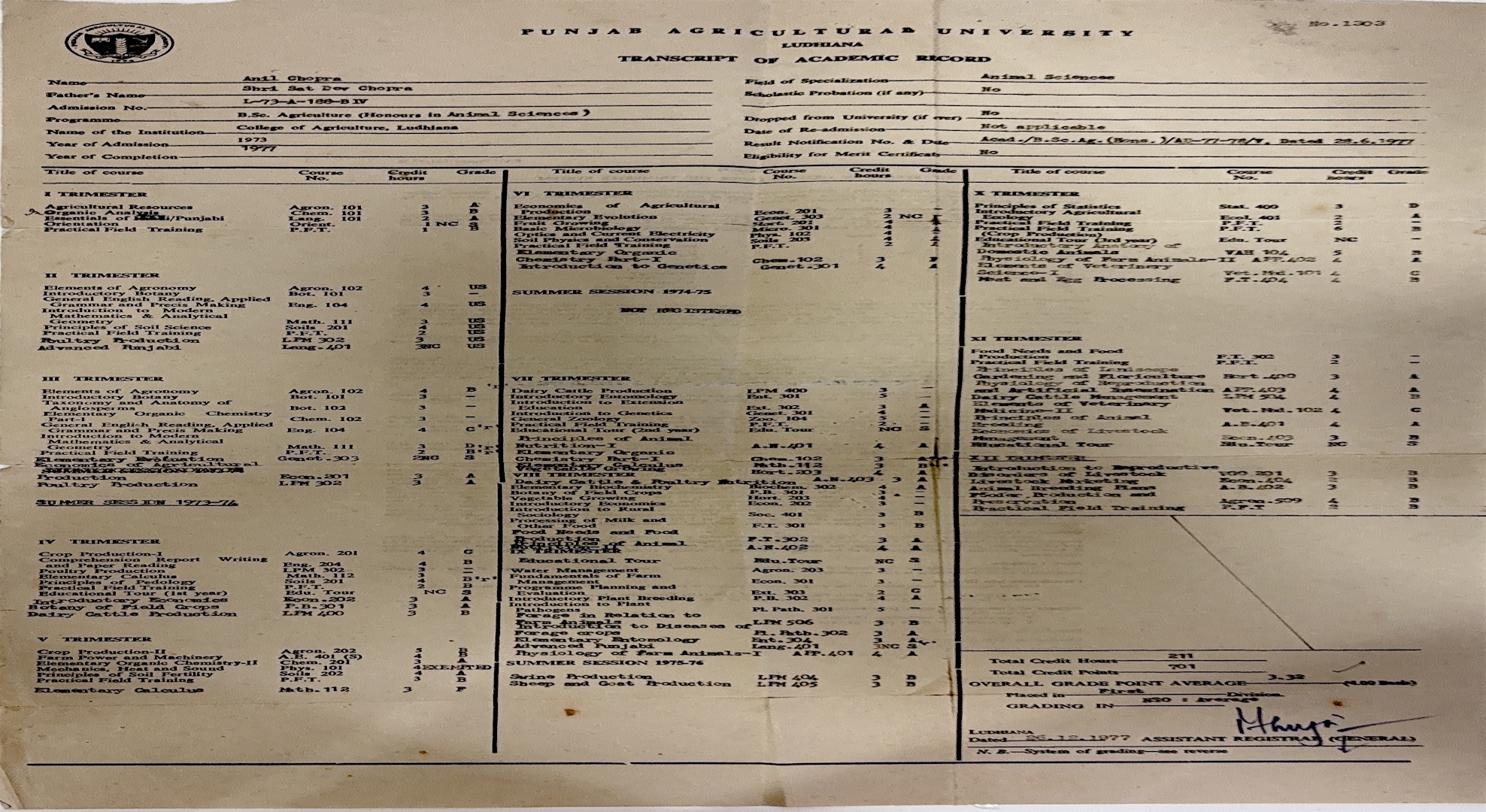
To make sense of this journey, I’ve started writing my autobiography. It’s a snapshot, really—the 70s through the lens of a middle-class university student. It was an era where existentialism sat beside Dostoevsky, the Vietnam War fueled campus debates alongside Naxalism, and the idealism in the air was scored by a dizzying soundtrack: Paul McCartney, John Lennon, Hotel California, ‘Love to Love You Baby,’ Glen Campbell. It was shaped by Buckminster Fuller’s visions, Alvin Toffler’s futures and shocks, and the articles in JS. Thank you Desmond Doig and Jug Suraiya for minting such a fabulous youth magazine. And how can I forget the soulful voice of Kuldeep Manak, a friend as well connecting me to my rural roots.

2025 was also the year I consciously let books reshape how I see the world. Not by chance—by choice. During the last two months, on Audible, I dove into a fascinating mix that challenged me in completely different ways:

📖 “1929” by Andrew Ross Sorkin — A deep dive into the crash that changed everything. What struck me most wasn’t just the financial collapse, but how human psychology repeats itself. The warning signs were there. We just didn’t want to see them.

📖 “Outlive” by Peter Attia & Bill Gifford — This one reframed my entire relationship with health and longevity. It’s not about living longer for the sake of it—it’s about living better, with clarity and purpose in those extra years. The science is fascinating, but the philosophy is what stayed with me.

📖 “My Experiments with Truth” by Mohandas K. Gandhi — Reading Gandhi’s autobiography in 2025 felt surprisingly timely. His honesty about failures, his commitment to principles over popularity—it’s a reminder that movements are built by people who are willing to be imperfect and persist anyway.

📖 “Altruism” by Matthieu Ricard — A profound exploration of what it means to care for others. Ricard makes the case that altruism isn’t just moral—it’s scientifically tied to our own wellbeing. A beautiful blend of neuroscience and philosophy that resonates deeply with the Nexus3P mission.

📖 “India” by Patrick French — A complex, honest portrait of a nation that defies simple narratives. It’s messy, vibrant, contradictory—and utterly compelling.

What I learned from this mosaic is that the best ideas connect. Finance and philosophy. Health and history. Longevity and ethics. They all weave together into a richer understanding.

And finally, this year of looking back, reaching out, and listening deeply ended with the purest forward-looking joy. I discovered the unbridled kid within me still alive and well, closing the last day of 2025 with my grandson, watching dolphins dance in a show at Phuket. It is 10 pm. Getting back to my cruise ship.

How nonsensical is the notion of keeping time.

As an Indian on a Singaporean cruise liner anchored in Thai waters, I’ll be closing 2025 at three different times. When Singapore cruise celebrates end of 2025 at 12 tonight, it’ll be 11 pm in Phuket and 10 pm in Delhi at same time for a same person which is me.

So, 2025, thank you. For the lessons in letting go, the courage to begin anew, the wisdom in reconnection, and the timeless truth that change starts within, radiates through our closest circles, and ultimately, is about protecting the wonder in a child’s eyes for the world they will inherit.